My Daemon Tarot Experience

Got this deck about six months ago after someone in my local occult shop kept raving about it, but I haven’t seen anyone mention it here yet. So here is my first deck review - the Daemon Tarot.
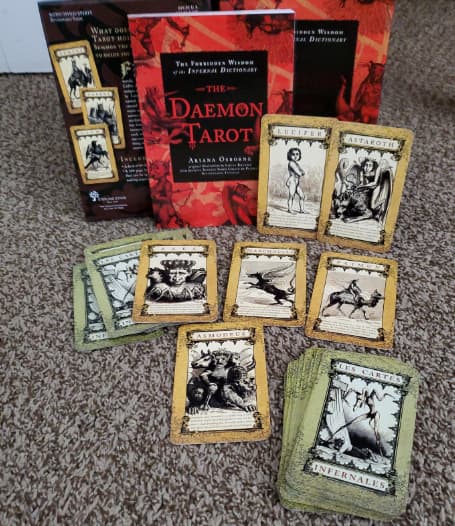
First impression when I opened the box - these aren’t your typical angel-and-rainbow oracle cards. Fans of dark Tarot decks will probably like this more.

The 69 cards feature demons from Jacques Auguste Simon Collin de Plancy’s 1863 “Dictionnaire Infernal” with the original Louis Breton artwork, and the energy coming off them is… intense. The cards themselves are good quality, flexible enough for smooth shuffling, and that back design with “The Infernal Cards” sets the tone almost immediately.

Not a deck that wants to mess around.

What really sold me was the 160-page guidebook. This seems about normal for a modern deck now, but the book is more of a crash course on demonology than a normal Tarot guidebook. Each demon gets proper treatment with historical background, symbolic interpretation, and divination meanings.
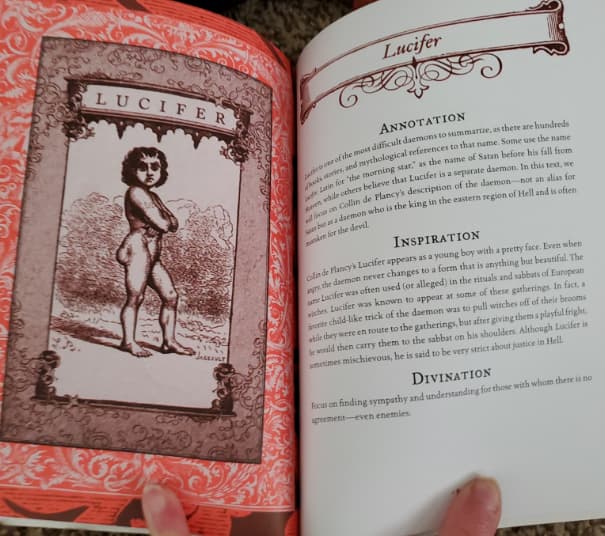
Like Behemoth’s entry explains the whole ancient Egyptian/Hebrew origins, the connection to gluttony, and how it contrasts with Leviathan. The divination sections are surprisingly nuanced, so I do think it could be viable for some real deep readings and not just used for some generic “shock factor”.

The deck pulls no punches about controversial history either. Osborne doesn’t shy away from discussing how European witch hysteria tied into antisemitism, or how Hindu deities like Kali got lumped in with “demons” by colonizers who didn’t understand them. Reading about how the whole “Witch’s Sabbath” concept came from twisted interpretations of Jewish Shabbat was eye-opening. Nice to see a new deck that acknowledges these problematic histories instead of just recycling the same old narratives.

I haven’t tried any kind of shadow work with it, but I’ve been using the deck with the same spreads I normally would. It seems to lean a little dark and harsh, but you’d probably expect that. You do need to rely on the card combinations with this one heavily, so I probably wouldn’t use it for single cards. Direct warnings without nuance or context might not be too useful.

The energy is definitely fiery and direct - some people find it too heavy for regular use. Maybe for shadow work sessions, if you need brutal honesty about a situation, it might be good. I can see it working for getting into subconscious patterns and facing uncomfortable truths. At around $20 (got mine for $18 on sale), it’s absolutely worth it if you’re drawn to darker divination tools or interested in demonology beyond the Hollywood version.

Not recommended if you’re looking for gentle guidance or new to oracle work - this deck assumes you can handle whatever comes up. But if you want something that’ll push you to grow and won’t sugarcoat the truth? This is your deck.

Would not suggest it as a beginner Oracle deck, but for more advanced users or collectors.
24 Likes

Most readings leave you with more questions than answers.

Get unlimited tarot readings and actually ask the follow-up. Full spreads, not generic meanings or automated generators.

→ Get Your Unlimited Readings Here ←

Not usually my kind of deck, but I really like it after being gifted it a few months ago. This deck has a really intense energy to it - feels old and heavy somehow. Been using it for a few weeks and the readings have been pretty accurate, even for basic daily pulls.

There’s something about these cards that feels different from my other decks. Maybe it’s the imagery or how the demons look like they’re watching you, but readings with this deck feel more like actual rituals. If you’re thinking about the $20 price tag and you like darker decks, I’d say go for it. The vibe alone makes it worth having.

Interesting review! I’ve been working with the Daemon Tarot for about a year now, and yeah, the intensity is real.

This deck demands respect. You can’t just pull it out at parties for fun. The entities in it seem to respond to your energy and intention. If you’re sincere and respectful, the readings can be really insightful. But if you’re just messing around, the deck either won’t cooperate or give confusing messages. I keep mine wrapped in black silk when not in use (got into that from collecting antiques - storage matters for certain objects). Unwrapping it helps me get ready for readings.

One thing I’d add - shuffling this deck feels important. I take extra time with it, almost like meditating while I shuffle. Makes the messages clearer. Everyone finds their own way, but with the Daemon Tarot, that connection during shuffling matters. You’re right about it not being for beginners. These energies are complex and you need experience to handle them. Some entities have heavy historical baggage that the guidebook barely mentions. They’ve been misunderstood for centuries, and you can feel that in readings if you’re sensitive to it.

Your experience really resonates with me - the Daemon Tarot acts like The Tower card itself, stripping away illusions and forcing us to confront things that we really need to. When I first started working with this deck, I made sure to cleanse it thoroughly with sage and set clear protective boundaries, treating each reading like entering a sacred circle. The intensity you describe is spot-on; these cards don’t whisper their messages, they practically shout them, which is why I always keep some grounding crystals nearby during readings.

The deck has taught me that the real power comes from how we approach it - with respect, clear intention, and understanding that we’re exploring archetypes rather than inviting anything unwanted into our space.

You’re right about this being an oracle deck rather than traditional tarot - no Major Arcana or court cards. I like the freedom of it. Working with these demon cards feels more like having a direct conversation with ancient energies instead of following the structured path that regular tarot has.

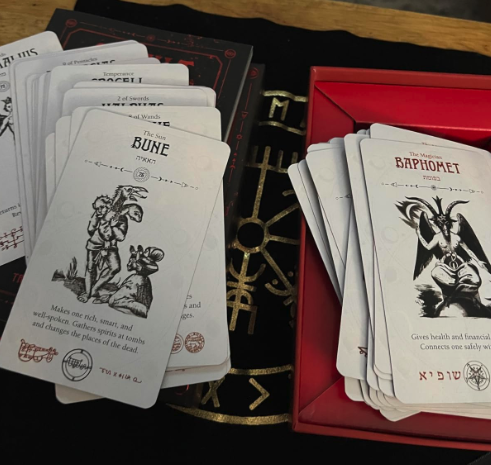
Anyone who likes this deck should also like the Occult Tarot. Meanings are printed on the cards and it’s more of a minimalist style with a white background.

I find it more approachable but it’s personal preference.

Great review, and thank you for sharing your experience. I was surprised we didn’t already have a thread for it, but I think I was thinking of the occult deck as well. This is 100% one of those decks that people either connect with instantly or put right back on the shelf.

The publisher labeled it “Tarot,” and I know some people who just want Tarot cards who were surprised by the cards when it’s really an Oracle deck, but its system is entirely its own, based on the 69 Breton illustrations from the Dictionnaire Infernal.

I’m glad you highlighted the guidebook’s approach to history. Osborne’s work in contextualizing the antisemitic roots of witchcraft stereotypes and the colonial demonization of other faiths is so important. It elevates the deck from just being “dark” to being a tool for critical thinking. Good deck. I won’t use it with everyone but I like it for the collection if not daily use.

I have to admit, I found the energy of this deck too heavy. I bought it because I love the historical artwork, but every reading felt draining. It’s been sitting on my shelf for months. Maybe I’ll try it again when I’m in a different headspace, but it’s not for daily draws… not yet.

The artwork is pretty cool but I kind of like the occult one more because of the brither background.

I’m not sure about this one. Working with these kinds of names and images feels like it could invite energies I’m not prepared to handle. I prefer to stick with decks that have a more protective or neutral vibration.

Just my opinion though. I know some people who really do work well with this kind of thing, I just don’t know how you do it.

Thanks for the thorough review! I’ve been working with this deck for a while now and wanted to add something about the naming confusion. Despite being marketed as the ‘Daemon Tarot,’ it’s actually structured as an oracle deck since it doesn’t follow the traditional 78-card tarot system with Major and Minor Arcana. The imagery is definitely dark (those Dictionnaire Infernal illustrations set a mood), but I’ve found the card meanings tend to be more balanced and constructive when you dig into them. Even the intimidating-looking demons often carry messages about personal power or transformation.

I’ve been experimenting with creating specific spreads for this deck. One is a 5-card ‘Shadow Integration’ spread that uses the deck’s directness to identify blocks, their roots, and pathways through them. The lack of traditional tarot structure gives more flexibility in how you work with it.

Has anyone else noticed this disconnect between the visual darkness and the actual divination meanings? I’m curious if others are finding similar experiences or if it’s just how I’m interpreting the cards through my spread work.

My mentor always reminds me that oracle decks like the Daemon Tarot work best when we approach them without preconceptions about ‘good’ or ‘evil’. They’re just tools for understanding different aspects of ourselves.

I’ve found this deck helpful for shadow work because it doesn’t judge or moralize. It just reflects back the patterns we need to examine with brutal honesty.

This deck is… intense. Working with it has shown me that I have more control when I face the darker stuff directly instead of avoiding it.

The demons on the cards are a good reminder that I’m the one holding the deck, not the other way around.

Interesting review.

Showed this to my teenage niece during our weekly lessons. Big mistake - spent the next hour trying to explain why demon imagery doesn’t automatically mean something is evil or satanic but for some people you have to explain why the Death or Tower cards are not the same as they see in the movies anyway.

I have the Goetia: Tarot in Darkness deck, which is also demon-themed but very different. That one is based on the Lesser Key of Solomon and follows a traditional 78-card tarot structure, but the art is modern and digital. The Daemon Tarot sounds more like a historical study deck, which is cool.

Has anyone experienced physical symptoms when first working with this deck? During my initial bonding session with the cards, I needed serious grounding afterward. Had mild headaches and vivid dreams for three nights straight.

Not trying to put anyone off, I’m sometimes sensitive to some darker decks when most people are fine.

Fun fact: Collin de Plancy converted to Catholicism AFTER publishing the Dictionnaire Infernal in 1863. He then spent years trying to reframe his work as cautionary rather than educational.

The irony is that his attempts to ‘fix’ the later editions only made the original more sought after by occultists. This deck uses Breton’s original engravings from before Plancy’s crisis of conscience, so it has that raw scholarly curiosity about demons rather than the preachy tone of later versions.

Question for the group: how do y’all handle reversals with this deck?

When Mr. Grumpy Demon flips upside down, does that make him less demonic? More demonic? My usual ‘blockage/internal’ reversal interpretation feels weird when Belphegor the Lazy Boy is already about stagnation.

I’ve found a good way to work with it is to pair it with a lighter deck. I’ll pull one card from the Daemon Tarot to identify the core of a problem or a shadow aspect I need to look at. Then I’ll pull clarifying cards from a Rider-Waite-Smith deck to find a constructive path forward. It balances the harshness with actionable advice.

I’ve noticed this deck works better in groups of three rather than single cards. Each demon seems to need others around it to tell the whole story. When Astaroth shows up in the center of my Celtic Cross spread, it usually means someone’s about to find out some uncomfortable stuff about power dynamics in their relationships. The deck tends to create these narrative arcs instead of giving standalone messages.

Just talked to the owner of my local metaphysical shop about storing intense decks like this. She keeps hers wrapped in black silk with obsidian on top - says it helps contain the energy between readings. I think I would need to do something like this to keep it in my house, especially around my other decks.

IMHO, the most powerful aspect of working with this deck is establishing boundaries before each reading. I learned this the hard way when I first started using it for client readings and the energy completely overwhelmed someone who wasn’t prepared for such direct messaging.

Now I always light a white candle and explicitly state my intentions, asking the demons to communicate with wisdom rather than shock value, which has made the readings much more constructive. The deck responded really well to this approach. IMO, treating these entities as teachers rather than tormentors completely transforms how they communicate. Buer, for instance, started appearing frequently in health-related readings once I acknowledged his traditional role as a healer rather than just focusing on his demonic classification.