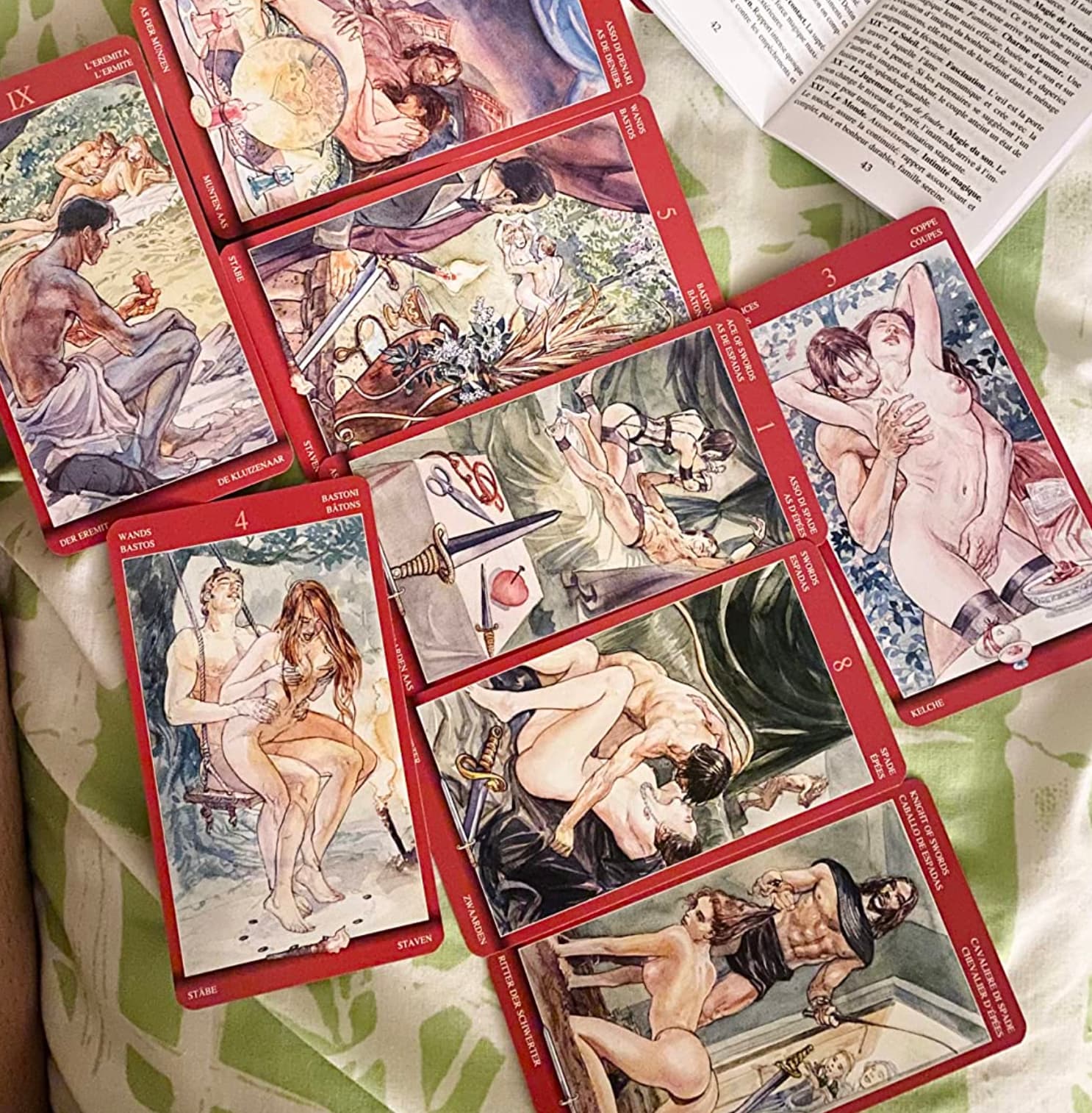
Just started working with Tarot of Sexual Magic and wow, it’s nothing like I expected. Nothing at all.
Thought it might be tacky, but it’s actually one of the most spiritual decks I own. The way it connects intimate energy to creative/divine power is mind-blowing - like finally someone acknowledged that sacred sexuality is actually… sacred.
Major Arcana cards show transformation through that lens we usually avoid in tarot. Perfect for shadow work, especially around creative blocks or power issues. The art is sensual but classy - more tantric philosophy than anything crude. Using it for exploring authentic expression and its opening doors, my other decks couldn’t touch.
I prefer the full size deck (it also has the booklet if you want the meanings that way). I’ve seen it used for twin flame readings. Obviously it’s a pretty NSFW deck (if the name didn’t tip you off already)…
I’ve figured out that tarot practice really depends on having a deck that fits your life. This particular one doesn’t do it for me, the symbolism is too focused on straight relationships and traditional gender stuff.
For me, tarot is personal. I look for decks that show all kinds of people and relationships. Lucky there are more options now than there used to be. Finding a deck that actually represents you makes a big difference in how useful the readings are.
The deck does explore sacred sexuality and it’s great for relationships or readings on how they’re thinking about you in a certain way… Just be sure you’re using it at the right situation. I wouldn’t pull them out with a client who wasn’t expecting to see them.
When picking decks for different readings, each one has its own vibe and focus. This deck is pretty centered on sexual and romantic stuff - that’s just what it’s built for. If someone’s asking about asexuality or wants guidance on non-sexual intimacy, they’d probably get better insights from a different deck.
Same goes for platonic relationship questions. Might be worth getting a few different decks if you’re reading for various types of questions. Some decks just work better for certain topics than others.
The sacred sexuality aspect is interesting, but restricting it to shadow work feels old-fashioned to me. These days tarot readers usually explore the full spectrum, not just the heavy shadow material. Seems like you’d miss a lot that way.
People always bring up tradition when they want to keep certain imagery out of tarot, but that doesn’t make sense to me.
We’d have to throw out every modern deck if we stuck to that rule, no cats, no zombies, no botanical themes. The art in this deck is beautiful, don’t get me wrong. But it would be better with more diverse relationships shown throughout.
Leaving out LGBTQ+ representation means you’re not capturing the full range of human experience, which is what tarot is supposed to do. The Lovers card seems like an obvious place for different kinds of couples. The Sun card could work too, since it’s about being real.
I was surprised to discover the minor arcana scenes flow without traditional suit symbols cluttering the imagery, it really lets you connect intuitively with the energy rather than getting caught up in standard meanings. Every reading feels like an experience of discovery, and the cards always guide you exactly where you need to go!
I’ve been hesitant to admit this, but this deck helped me realize I’d been using ‘spiritual bypass’ to avoid dealing with my physical self.
The Three of Swords here shows heartbreak through the lens of bodily disconnection, not just emotional pain. It made me understand that my chronic fatigue might be linked to denying this whole part of myself. Still figuring it out.
I’ve used a similar deck with my girlfriend once. It brought up some stuff we’d never really talked about before. Might be worth trying if you’re both into that kind of thing.
The cards themselves are good quality. Sturdy cardstock, smooth finish, shuffle nicely. Since the imagery isn’t… traditional, I can’t rely on standard symbolism when reading for others, have to go more by intuition.
Beautiful printing and colors, but the intimate artwork means I need to be careful about which clients I use it with. Sometimes it just crosses a line.
I think the idea of bringing sacred sexuality into tarot is really interesting, but this deck didn’t quite hit the mark for me. It could have shown more variety in body types, ethnic backgrounds, and ages, which are key aspects of sacred sexuality around the world.
It also seemed like femininity and masculinity weren’t portrayed equally, with femininity feeling more objectified. If you’re into this kind of thing, Donald Michael Kraig’s ‘Modern Sex Magick’ offers some deep insights into sacred sexuality that could inspire more symbolic tarot imagery.
Personally, I prefer decks like the Thoth deck, which weave these themes into the cards in a more small way. But hey, if this deck hits home with you, that’s what counts. Every reader has their own preferences. For me, though, I enjoy decks that use symbols and metaphors to tap into the deeper parts of the mind rather than just focusing on the visuals.
This deck’s guidebook is super minimal, just one-sentence meanings for each card.
With reversals, there’s so much room for interpretation that it’s kind of overwhelming. The reversed cards get into shadow aspects of intimacy and power, which is interesting but also challenging without much guidance. Death and High Priestess reversed are particularly intense. They bring up stuff about blocked transformation and denied intuition.
You basically have to figure out your own meanings around how sexual energy gets misdirected or suppressed. The lack of detailed explanations forces you to rely on your own understanding, which can be frustrating when you’re looking for more direction.
The Tarot of Sexual Magic deck is cool for exploring intimate themes, but it might not suit all professional environments due to its explicit images.
Sometimes, like when the Tower card pops up during gentle change readings, it can feel a bit intense. In those cases, a more neutral deck might be a better choice to keep things professional.
Yeah the instruction booklet is really minimal. The 8 of Pentacles just says ‘Indifference. Magic in the cup of coffee’ and that’s it. I started keeping my own journal with expanded meanings because after using this deck for a while, you realize there’s way more to it than those cryptic phrases.
Why is it that The Emperor never gets to lounge around in flowing silks showing off his chest like The Empress? Or what if The Magician’s robes were as revealing as some versions of The High Priestess?
The feminine cards always seem to get the ‘mysterious seductress’ look while the masculine ones stay buttoned up in their power suits. Would The Hierophant lose his spiritual authority if he showed some ankle?
Would The Hermit’s wisdom disappear if his robes had a plunging neckline? Just once I’d like to see a deck where The Knight of Wands is giving bedroom eyes while The Queen of Cups rocks sensible armor. These cards are meant to be universal archetypes, not a medieval Victoria’s Secret catalog.
Give me equal opportunity mystique, either everyone gets the wind-blown, barely-there gossamer look, or everyone gets proper mystical clothing. The magic shouldn’t depend on how much skin is showing.