I know a lot of people around here are big proponents of Tarot journaling as one of the best ways to learn. You’ve sold me. I’m in!
I’ve seen a couple of tarot journal templates floating around, but I’m looking for advice on the best one to use. Some seem to keep it pretty simple, while some get reaaaaly in detail and I don’t know which I should be doing. Your suggestions (and/or links to a template) would be appreciated.
Mmost people start with something super detailed and then naturally strip it down to what they find useful. For example, I don’t really find it useful to track date and time of a reading, as long as I know the question, spread, cards and the message I read from the spread.
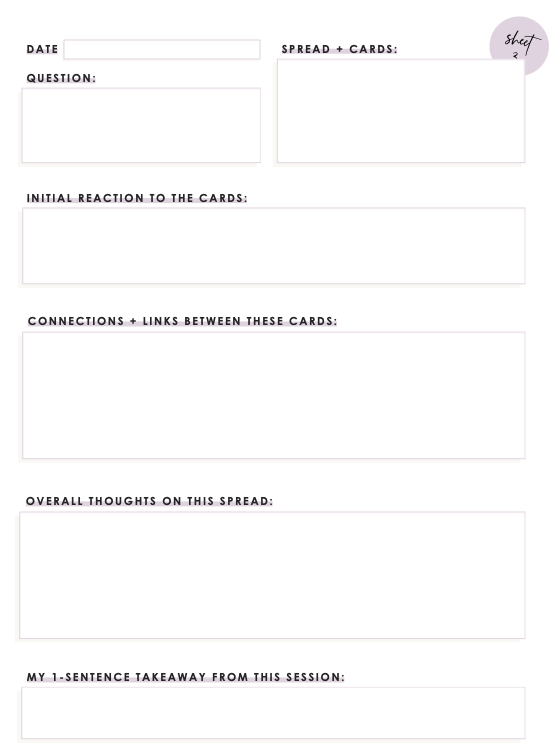
You can get a bit more granular with something like this, though:
We’ve got members who have huge spreadsheets tracking the moon phases, reversals, positions, intuitive hits, traditional meanings… honestly, it seems like a full time job. If that works for you great, but you don’t always need something that nitty gritty.
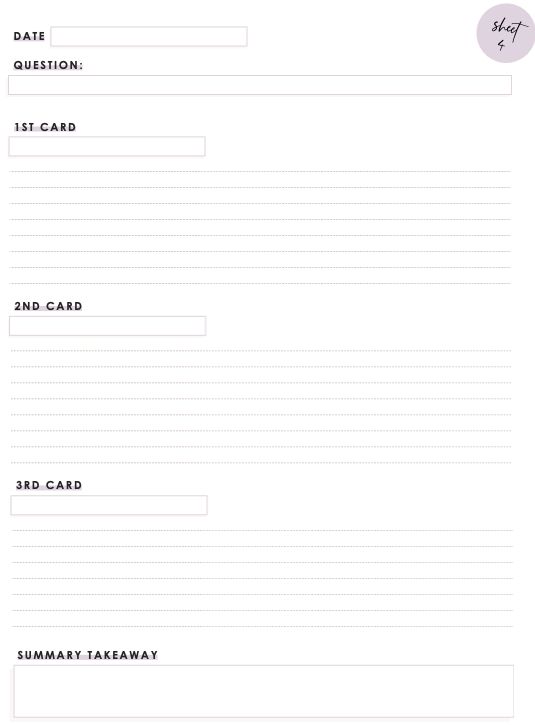
I would say something like this, keep it simple with a three card reading and just go a card at a time:
Some people use a digital template on their phone or tablet. I’m old school and I treat my Tarot practice with respect. I like a Moleskine notepad, but I still use this template on every page when I do a reading. Just use one with grid pages.
I didn’t like any of the digital ones. I never actually stuck with them, and if you’re not sticking with them, then you’re never getting anything out of them.
I think anyone reading the tarot should be journaling. For beginners it is the fastest way to start being able to see the messages and for experienced readers it keeps us improving.
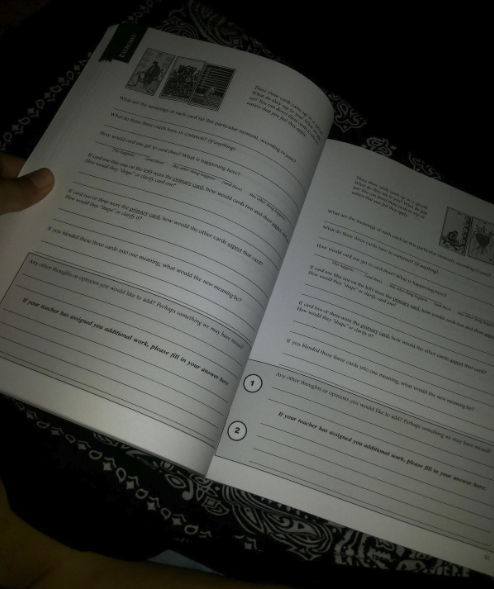
This is the workbook I like. It’s not digital but that makes it so much better:
You could make something similar yourself but I would suggest journaling for a while like this and making your own template once you have some experience with it.
There are some insanely complex Notion ones people will try to sell you, but you don’t need anything like that.
I like tracking what I read in the cards and then the outcome later on. Helps me see where I’m right and where I make mistakes in the interpretations. Get a composition notebook from the dollar store. Date at the top, cards in the middle, thoughts at the bottom. When you fill one up, start another. My shelves have twelve years of these notebooks and they tell me more than any spreadsheet could.
Those detailed templates are good for maybe your first month while you’re learning card meanings? After that it becomes busywork. Focus more on tracking what questions you’re asking repeatedly, that will tell you more than your interprations of readings ever will.
I use different highlighters for each suit, yellow for Wands, blue for Cups, etc. Makes it easier to spot patterns when I’m flipping back through months of readings. Plus it’s less overwhelming than filling out twenty different categories.
When I teach my sister and a couple of friends, we use a story beats page: three short lines labeled scene (what’s happening), friction (what complicates it), and next step (one concrete action). Keeps even a 5-card spread digestible.
We also track courts with a simple toggle-person in my life vs inner role-to help spot when the Queen of Swords is Aunt Maya versus my own boundary-setting mode.
For you, are you hoping the journal will help you memorize the 78, improve your question crafting, or see how well your readings land over time? Will you be logging mostly daily draws or situational spreads? Do you read reversals or elemental dignities that might need their own boxes?
If you share those preferences (plus paper or app), I can share the exact one-pager I give my family group and how we switch it for relationship reads versus career check-ins.
One angle I rarely see in templates is querent-safe structure. I keep fields for consent captured (yes/no), context boundaries (what’s off-limits), and a one-sentence prediction that can be tested with a confidence rating and follow-up date.
After the follow-up, I log the outcome and a lesson learned, then tag deck, location, and timing so I can spot patterns in different settings. This keeps journaling ethical, testable, and actually helps improve reading accuracy over time without turning the page into a novel.
I use a template with extra space for ‘alternative interpretations’. I pull a card, write my initial thoughts, then add notes when I see the same card interpreted differently in readings or study groups. The Tower can mean breakthrough to one person and chaos to another.
Having that comparison section in the template helps track how different people see the same cards. You start noticing patterns after a while.
Edit: Oh, and if you’re torn between simple vs detailed, maybe try a template with optional fields you can fill in as you grow. That way you won’t feel overwhelmed starting out but still have room to expand later.
I’m actually in the same boat (trying to build out my Book of Shadows in Notion and integrate tarot tracking!)
Started with a super complex setup tracking every possible detail (moon phases, specific card positions, time of day, mood, weather…) but it became more of a chore. Better just to focus on the question, the spread, the cards pulled, and my initial interpretation. Then I leave space to come back and add reflections on how accurate the reading was.
With Notion, you can always add more complexity later. I’d start with just date, question, cards, and interpretation. Once that becomes a habit, you can add whatever other stuff you want to track.
Would love to see what template you end up with! Definitely saving this thread for inspiration.
I used to love elaborate spreads and color-coded tracking systems. Part of me wants to tell you to do all the detailed templates, tracking moon phases, card reversals, recurring symbols, everything…
But I started with a really complex system and burned out fast. My current goal is just to maintain a daily draw practice for three months straight (on day 12 now), so I keep it simple: date, card pulled, initial impression, and how it played out. Once that becomes habit, I’m planning to add things like elemental dignities and numerological patterns. Maybe start basic and let your journal evolve? You can always add more sections later when you figure out what you actually want to track.
Think Hermit-style: use your journal like a lantern to keep the reading clear. Before you pull cards, do a quick energy check. Jot a couple of body sensations and rate how grounded you feel (1-10). Afterward, note any shift and pick one small action for the next day.
You can also track elements for each spread (fire, water, air, earth, and Majors) and add one line on how that balance showed up in your day. I keep a small box for a closing ritual-take a few breaths or write one line of gratitude, so the reading doesn’t bleed into the rest of my day. A single seed question at the top can help keep the focus.
I think the pattern here seems to be that there’s no one way to keep a tarot journal and you should keep it simple to start with and learn what works for your practice.