I’m finally caving, and I need some Tarot journal recommendations, please.
So I keep running into the same problem with tarot journals (they give you these tiny boxes for card positions and like, a sentence worth of space for interpretation. That’s fine for quick daily draws, but when I’m actually sitting with a spread, my brain just goes, and suddenly I’m writing in margins and flipping to random pages in the back.
I’ve seen the free ones, but I think I want something a bit more flexible. I’ve tried a few different notebooks. Nothing’s really working the way I need.
What I want is something with actual structure (spots for positions, maybe some prompts), but also enough blank space that I’m not immediately out of room. Does that exist, or do people just use regular notebooks and make their own templates, because honestly, I might just do that at this rate.
Oh, I feel this SO much. The tiny boxes thing drives me up the wall, especially with bigger spreads like a Celtic Cross, where every position has layers you actually need space to unpack. But Tarot journaling is the best thing you can do with your practice! It can take a little work to get it going, but without it, I could never get the kind of readings I do now. Let alone be a professional reader.
For the couple of bucks they cost, they’re worth more than all the other decks I’ve ever collected (too many) because they helped me really get deep meanings out of my spreads.
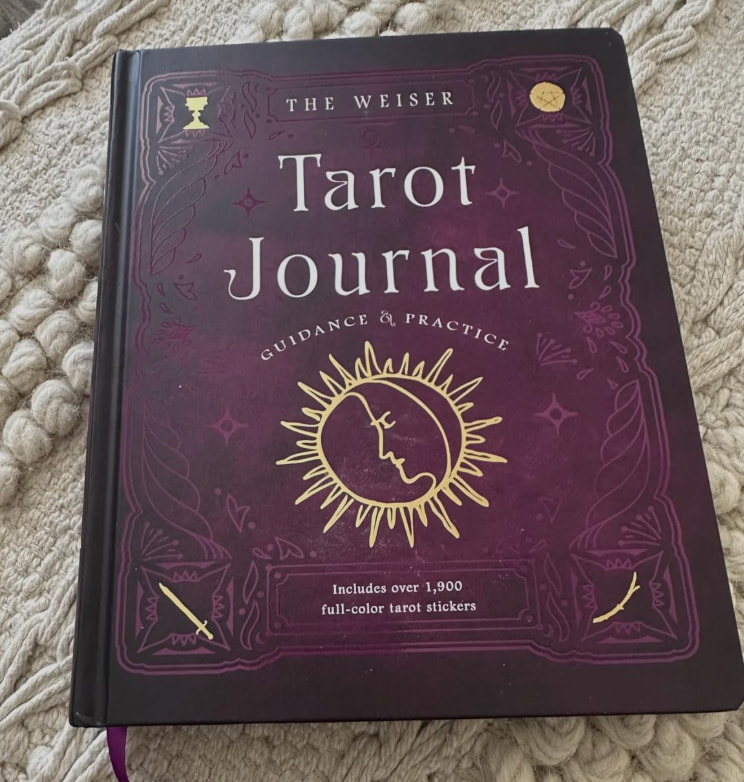
The Weiser Tarot Journal (by Theresa Reed) is worth checking out. Hardcover, gilded edges, ribbon bookmark. It comes with tarot stickers so you can recreate your spreads on the page. Compact enough to carry around too. The stickers are the selling point for me because you can lay them out however your spread actually looks, instead of being shoved into some preset grid that doesn’t match what you pulled.
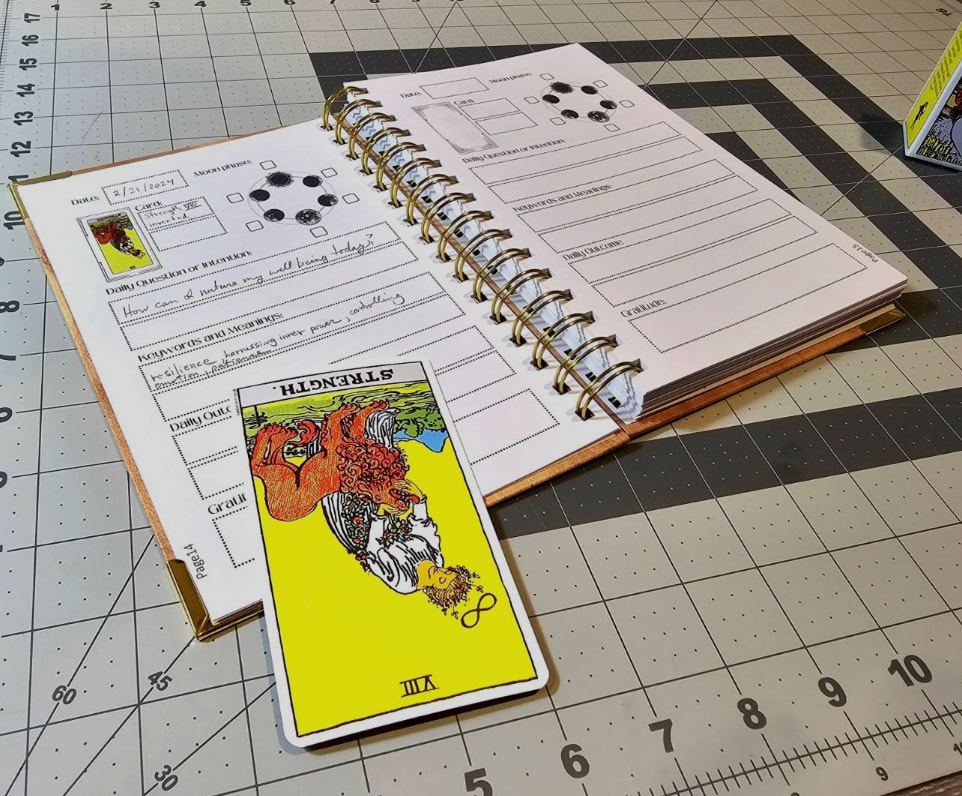
Dedicated pages for spreads with position breakdowns and thoughtful prompts, while still providing substantial open writing space per entry.
This one leans into a planner-style format with tarot-specific sections, giving you structured spots for daily/weekly spreads, card positions, and prompts, but with extra roomy layouts and open pages to write as much as you want.
It’s great if you like blending planning with journaling, and the thematic witchy design adds inspiration without crowding the writing areas. It’s a flexible pick for people who outgrow basic templates quickly.
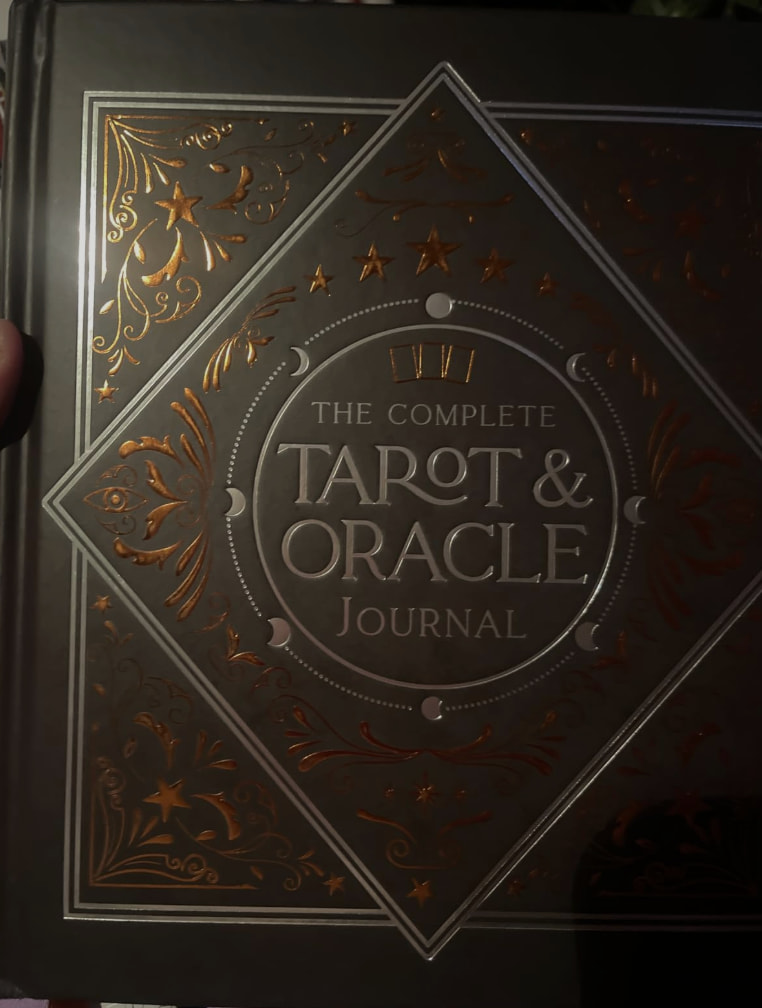
This one is big, luxurious, and has lots of generous writing space for recording readings in detail. It includes structured sections for tracking card pulls and interpretations, plus prompts to guide reflection, but the layout leaves ample blank or flexible areas so you won’t run out of room mid-spread. The premium design (gilded edges, ribbon markers, sturdy build) makes it feel special for serious journaling sessions.
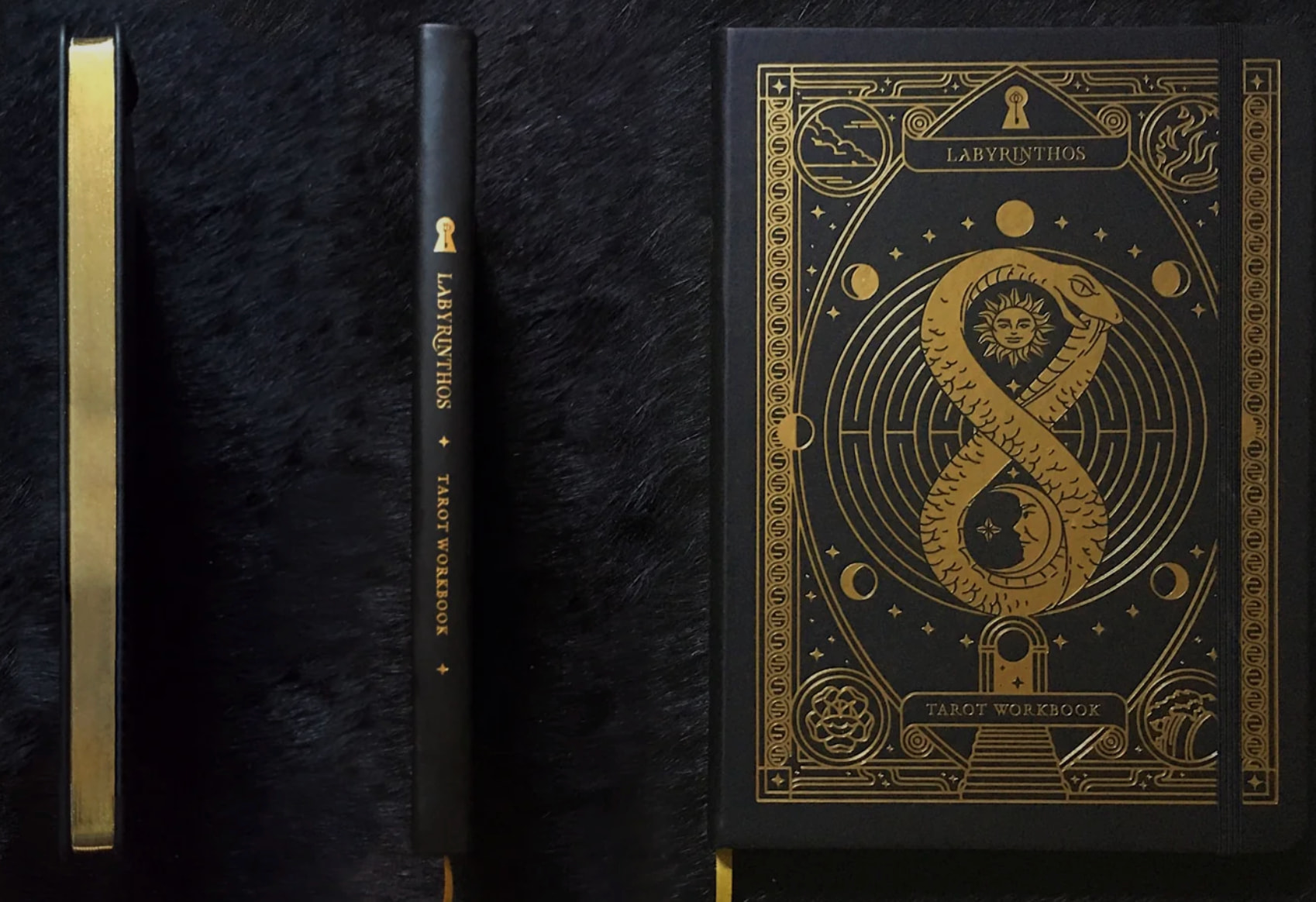
Okay, if you haven’t checked out the Labyrinthos Tarot Journal and Workbook, it might be exactly what you need. It’s a workbook-journal combo that walks you through building your own interpretations for all 78 cards using prompts and personal experiences, rather than just handing you meanings. It has a spread compendium and reference sheets for keywords and reversals. Worksheets help break down extra layers in your readings. Good balance of structure with room to actually think.
Yeah, this thing is pricey but I do agree I would much rather have a good journal for my spreads than just buy another deck and get the same mediocre results. Such a big fan of a good journaling session about a spread.
If you do go the make-your-own route with a blank notebook, A5 dot grid. It gives you guidelines without boxing you in, portable enough to carry around but still has room to write real thoughts instead of cramming everything into margins like you’re annotating a medieval manuscript.
So I know you said you want something physical, but just throwing this out there, there are apps that lets you create your own spread templates and log cards for each position with as much interpretation as you want. It also tracks your card statistics over time, stalker cards, recurring patterns, all of that. You can export readings as PDFs and print them too, which is nice if you still want a physical record. The unlimited space thing is what sold me on going digital.
But if physical is non-negotiable, and I get it, there’s something about pen on paper during a reading. Look into the Tanager Collection. They make spread-specific journals, separate ones for 3-card spreads, 5-card spreads, and the 10-card Celtic Cross. Each page has spaces for sketching cards plus room for interpretation and later reflections. Having the journal match your spread size helps with the ‘running out of space’ problem because the pages are designed around that specific layout instead of being one-size-fits-all.
Most commercial tarot journals assume everyone’s doing quick daily pulls. If you’re someone who sits with a spread and really digs in, you almost need two separate systems, one for dailies and one for deep reads. Or just commit to the binder + printables life and never look back.
Dot grid notebooks. Honestly the best option for this.
You can draw your own little card boxes whatever size you want, and the dots keep everything straight without feeling like you’re writing on lined paper (which I always hated for some reason). I got one with a really pretty cover and it just makes the whole practice feel more special, like a little ritual almost.
Those journals with the tiny cramped spaces stress me out more than anything.
Building your own system is the only way. Sacred Seed has a YouTube video called ‘My Tarot Journals’ that helped me a lot after I gave up on pre-made journals.
Actually, I’ve just started watching this one:
My brain just needs to build the thing itself, or it won’t stick.
The Midori Traveler’s Notebook is my tarot soulmate.
The leather cover smells like ancient spells. It’s so soft and supple. The regular size stuffed with MD refills is perfect. Cream paper, 80gsm, no bleed even with watery inks or markers for card doodles. I add lined refills behind each position sheet because the elastic holds like 10 easy.
The spine lies completely flat when open. No fighting pages during deep reads. Print simple spread templates (Etsy has tarot ones with huge note boxes), thread them in, done. Washi for dividers. The thin refills stack your novel-length thoughts no prob. That matters when you’re doing those massive Celtic cross readings and suddenly three pages deep into shadow work territory you didn’t plan on.
Okay, slightly outside the box tip. Before you commit to any journal system, try doing your next five readings as voice memos on your phone, just talk through your interpretation out loud while you look at the cards, then listen back later and jot down only the parts that still resonate.
I’m curious whether writing while reading is interrupting your flow and that’s why everything spills everywhere. The physical space might not even be the main issue.
If the voice method feels more natural and your interpretations come out more coherent, then the journal becomes a handpicked archive. You write down the distilled insights after the fact, which makes even those tiny box journals workable. But if voice memos feel wrong and you genuinely need to be writing in the moment, then yeah, that’s a space problem and the answer is different.
I switched to a ring-binder system, A5 or half-letter size, with printable spread pages and loose-leaf lined sheets behind each position. So if Position 3 turns into a novel, you just add pages. Simple as that.
According to extremely scientific research (me + my cat), 73% of ‘tiny boxes’ are responsible for 92% of tarot journaling rage-quitting. And honestly that tracks.
You can keep a divider section for spread layouts you actually use and another for card study, without everything getting mixed into one mess.
If you go physical, maybe add a quick ‘follow-up’ page template too. Date, what happened, what you learned. That’s where the real accuracy tracking shows up.
Index cards. One card per position, clip them together when you’re done, and you can write as much as you want without running out of space (which is always my problem with journals).
Had this exact problem last year. Bought one of those gorgeous pre-made tarot journals with gilded edges and moon phases on the cover, and within a week I was taping extra pages in like some kind of unhinged scrapbooker.
What actually saved me was just a Leuchtturm1917 A4 dotted notebook. It’s not tarot-specific at all, which is why it works. I dedicate a full two-page spread per reading, left page for the layout sketch and card positions, right page completely open for stream-of-consciousness interpretation. The A4 size gives you nearly double the writing space of those A5 journals most tarot journals come in. The bigger size matters.
The numbered pages plus the built-in table of contents at the front mean you can index readings by spread type or question theme without needing tabs (I do both, loosely). No tiny pre-printed boxes telling your brain when to stop. That was the real issue for me, I think.
Snapping photos of your spreads and attaching them right to your notes is great for tracking readings over time.
I’ve been using Diarium for my tarot journaling. You can build custom templates with as much space as you need for each position (which matters when you’re doing bigger layouts). Nothing’s locked in, so you can always go back and add more insights later when a card’s meaning finally clicks. That part honestly makes the biggest difference for me.
The real question is why the blank notebook didn’t click for you. That’s actually your compass here. Like pulling The Hermit when you’re asking about external stuff, sometimes the answer’s about looking inward at the resistance itself.
So think about what happened. If blank pages felt like staring at an unmarked Fool’s journey with no clue where to step, you want prompts. If the notebook never even made it to your reading space, maybe your phone becomes your grimoire.
And if you were just transcribing without processing, a workbook with pre-loaded card meanings you can highlight and annotate might be your spread. Sometimes the structure does the heavy lifting for you.
Those journals were showing you what your practice actually needs.
Get the Wild Unknown Tarot Journal by Kim Krans. It has these big spaces where you can draw your cards right in the spread layout, like almost full size, and then the lined pages for interpretations just go on forever. There are prompts for each position but honestly it’s mostly blank areas everywhere, so your brain can just ramble without squeezing into some sad little rectangle.
I do three-carders or full ten-card spreads and never run outta room. Even has moon cycle trackers if that’s your thing (not for everyone but I love it). Paired it with my Wild Unknown deck and it just works really well together.
Ok so have you looked into a Traveler’s Notebook setup? The Midori-style ones with the elastic bands. You slot in thin notebook inserts and dedicate one to daily pulls, one to deep spread work, one to card study notes. Swap them out when they’re full, archive them, move on.
… I just realized I’ve basically described a binder with extra steps and a leather aesthetic. Huh.
The physical separation of different reading types into different booklets solved the exact problem you’re describing. My spread readings stopped bleeding into my daily draw pages (which was driving me insane), and everything finally felt organized without being cramped. Not a perfect system. Just the one that actually stuck for me.