I thought it was time for a quick guide on how to read the Tarot with playing cards.
You don’t need a fancy deck to start reading. I (personally) think one of the best-kept secrets in cartomancy is that a standard deck of playing cards works beautifully for divination.
Plus, you probably already have one in a drawer somewhere, so you can get started right away.
Before we get started: A lot of readers have mixed opinions on using playing cards. I’m a huge fan of getting started with playing cards if you’re just keen to get going, but I also think you will learn faster and get better results with a good beginner tarot deck.
If you don’t really want to learn and you’re just looking for a Tarot reading but you don’t have a deck, you can get a free reading here instead.
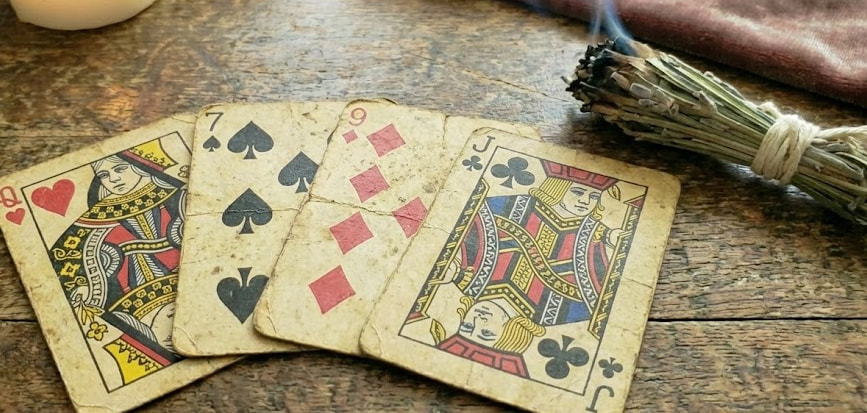
Playing card divination predates modern tarot decks by centuries. The history of Tarot goes back, but it’s not necessary to know it; it’s an interesting read. Card divination appears in 1450s Spain, while modern Tarot decks didn’t appear until the 1750’s.
So, whether you’re just curious about the Tarot or you’re working on a budget here (there are some good, cheap tarot decks out there, too), you’re still getting started with one of the oldest traditions.
Basic Correspondences
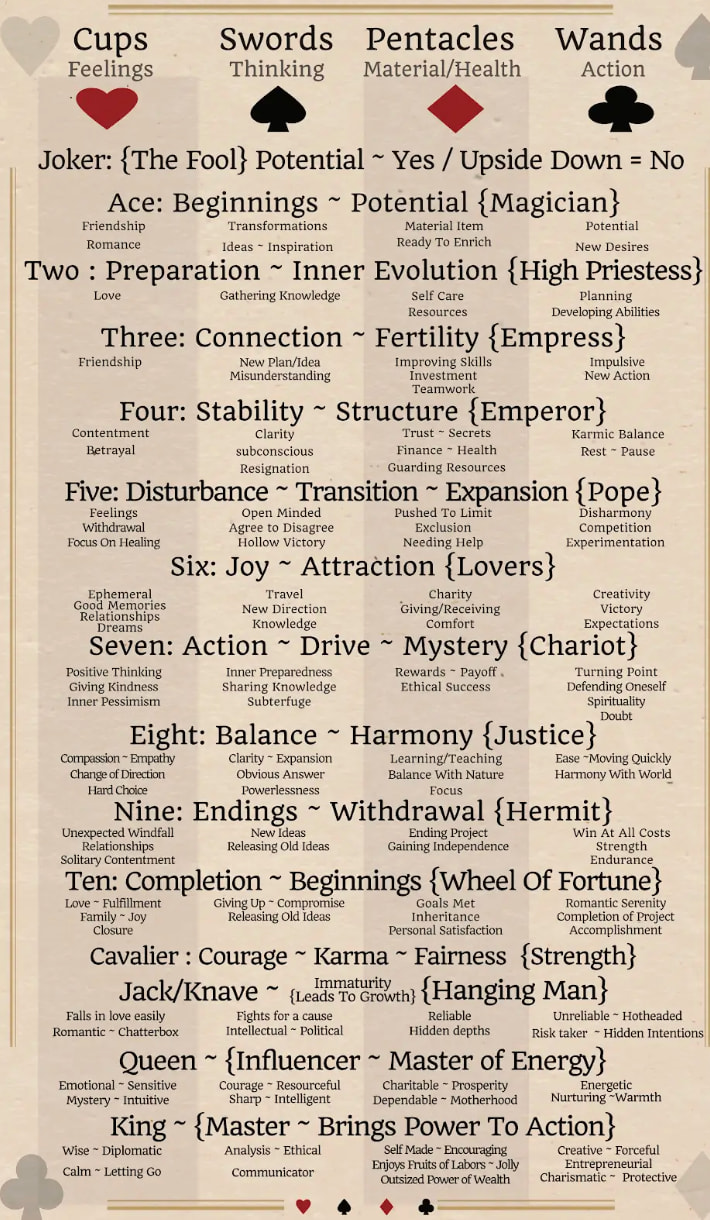
A standard 52-card deck (which is what you probably have) maps onto tarot’s Minor Arcana. Here’s how the suits translate:
- Hearts: Cups (emotions, relationships & intuition)
- Diamonds: Pentacles (money, material matters & practical concerns)
- Clubs: Wands (creativity, ambition & energy)
- Spades: Swords (intellect, conflict & truth)
I know I’ve been cluttering the forum this week with my threads on different Cartomancy card meanings (sorry for that!), but that way you can look up the meaning for each individual card meaning (also working on a quick tool that will do your reading for you - I’ll link it here tomorrow).
Some experienced cartomancers actively reject these tarot parallels. Playing cards developed their own meaning systems independently, and some practitioners find that forcing tarot correspondences actually muddles their readings. It’s a good way to get started as a beginner but something to keep in mind as you develop your practice.
The numbered cards (Ace through 10) carry similar meanings to their tarot counterparts. Court cards shift slightly: Jacks become Pages, Queens stay Queens, and Kings stay Kings. You lose the Knights, but honestly? Many readers find the streamlined court easier to interpret.
What About the Major Arcana?
This is where personal preference really matters.
Some readers simply work without Majors, treating every reading as focused on day-to-day matters rather than major life themes. Others assign the Jokers to represent The Fool or use them as wild cards for meaningful spiritual messages.
As a beginner, don’t worry about these too much. I would focus on the basic beginner Tarot tips instead.
I’ve seen readers pull specific cards to represent key Majors-the Ace of Spades for Death (transformation), the Queen of Hearts for The Empress. There’s no single correct system here. You can absolutely develop correspondences that feel right for your practice.
Some Meanings That Differ From Tarot
If you’re coming from tarot, a few cards carry surprisingly different traditional meanings in cartomancy:
- Seven of Diamonds: traditionally means lies and deceit, which differs dramatically from the patient assessment of the Seven of Pentacles
- Two of Hearts: often indicates physical intimacy explicitly, more direct than the Two of Cups partnership symbolism
- Five of Hearts: signifies fertility or marriage, completely unlike the grief-focused Five of Cups
These are just some examples and only matter if you’re using your playing cards to stand in for a Tarot deck. You can look up individual card meanings here for the original playing card meanings.
The sevens in particular are worth paying attention to.
Traditional cartomancy treats them as “epitome cards”, the most concentrated, often problematic form of each suit. Seven of Clubs brings gnawing doubts, Seven of Hearts warns of love turned toxic. This intensity differs markedly from tarot’s approach to sevens.
The Red/Black System
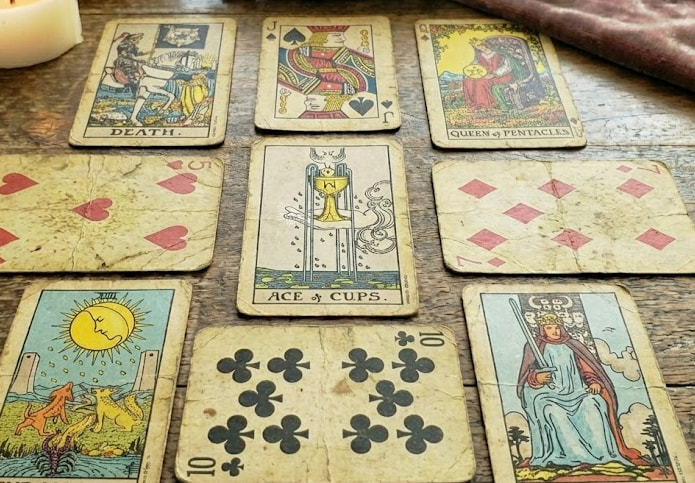
This is something I do really like compared to the traditional Tarot readings. Cartomancy with playing cards has a built-in positive/negative polarity through color.
In simple yes/no readings, red cards (Hearts, Diamonds) generally indicate yes or positive developments. Black cards (Spades, Clubs) suggest no or challenges ahead.
Some readers use this for quick pattern recognition-all red cards in a spread signal a very favorable outcome, while black surrounding a red card shows a problem demanding attention.
That said, don’t get too hung up on this. The only truly “negative” cards in an extended reading are usually the Spades. Context matters with the playing cards, just like it would with Tarot.
Getting Started (And Getting Real Answers)
If you’re new to this, I’d suggest starting simple.
You can see a great guide on a beginner Tarot spread here. It includes an image with the layout meaning for reference, and finds a good mix of keeping it simple while still getting into some details.
Or go with a simple three-card spread: past, present, future. Shuffle your deck while focusing on your question, then pull three cards. Let the suit tell you which area of life is speaking, and let the number guide the specific message.
Low numbers (Ace through 3) often indicate beginnings or potential. Middle numbers (4 through 6) suggest development or choices. Higher numbers (7 through 10) point toward intensity and culmination.
Here is where you can use the search bar to look up each card meaning but the real learning curve is learning to read Tarot card combinations. This is the biggest thing you can do to really get messages from the Tarot cards.
Why Some Readers Prefer Playing Cards
There’s something wonderfully accessible about reading with playing cards. No intimidating imagery to memorize, no esoteric symbolism to decode.
Just numbers, suits, and your intuition. There’s something beautiful in the simplicity.
Playing cards also travel well. You can read at a coffee shop without drawing attention. Some readers appreciate the anonymity… it looks like you’re just shuffling cards. Historically, this discretion mattered: enslaved people in the antebellum American South used playing cards for divination because enslavers often permitted cards for entertainment.
The ordinariness of the deck has always provided cover that elaborate tarot imagery cannot.
A Note on Energy & Cleansing Your Cards
I (personally) cleanse my playing card deck just like I would any tarot deck (and I just wrote a full guide for that here). The techniques transfer directly: moonlight, crystals, breath work, whatever makes sense with you. The cards may look ordinary, but they’re still holding your readings.
Italian folk tradition holds that a small spirit inhabits each deck, often residing in the Ace of Hearts. Some traditions recommend knocking on the deck three times before dealing and asking the cards to speak truth. Whether you take that literally or treat it as a meaningful ritual is entirely up to you.
Finding Your Own System
The beautiful thing about cartomancy is its flexibility. In fact, one of the most wonderful things about the Tarot in general is that your practice is your own.
You might find correspondences online that don’t click for you, and that’s completely fine. The real magic comes from building a relationship with your deck over time. Get started with a guide like this, but then let your intuition guide you forward.
Start reading. Take notes. Notice which cards consistently appear and what they seem to mean for you. Your personal system will develop naturally.
And my last piece of advice is practice often! Just start doing readings. As many readings as you can.
 I think, unless the querant knows what it is, though, I would stick with normal Tarot cards. They might not understand why I’m taking out playing cards and some people (who don’t know the history of the cards) wouldn’t take you seriously.